
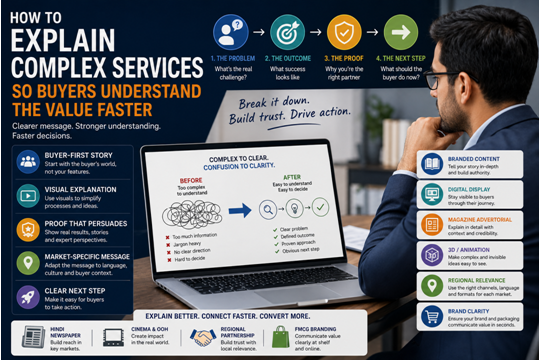
How to Explain Complex Services So Buyers Understand the Value Faster
Complex services become hard to market when teams lead with tools, credentials and delivery steps. Buyers need to understand the problem being solved, why the offer is credible and what to do next. The goal is not to hide detail; it is to reveal it in the right order.
Start With the Buyer’s Decision
Explain the situation, the risk of leaving it unresolved and the outcome the service creates. A clear brand positioning strategy keeps this focus consistent across campaigns and sales materials.
For in-person interactions, documentation becomes proof. A well-planned event photography approach can capture demonstrations, customer conversations and leadership moments for follow-up.
Turn Expertise Into a Simple Narrative
Simple does not mean shallow. It means deciding what the audience should understand first, which evidence they need next and what technical depth can wait. A concise whiteboard animation can turn an unfamiliar process into a sequence people can follow without a sales representative in the room.
Nonprofit teams face the same task. Useful online fundraising ideas connect a contribution to a clear outcome rather than a broad promise.
A buyer-friendly explanation needs:
- The problem, outcome, evidence and next step.
- One main idea per asset, with depth available on demand.
- Language based on the customer’s world, not internal jargon.
Use Proof to Make the Offer Believable
Once the basic idea is clear, show what it looks like. Customer stories, demonstrations and expert perspectives make an intangible service easier to assess. A planned branded-content format creates more room for explanation than a short awareness message, while a Zee digital display campaign keeps the promise visible during research.
For high-consideration categories, deeper formats add context. An ABP magazine advertorial can support a structured explanation, while 3D medical animation shows how technical or invisible processes can become clearer.
Adapt the Explanation to the Market
The core message should stay consistent, but the entry point can change by audience and region. A regional category partnership can reinforce relevance in trusted local media. Hindi newspaper advertising and a Maharashtra cinema and out-of-home campaign can support language- and location-specific visibility around the same promise.
For consumer brands, clear explanation begins before the first click. A solid FMCG branding foundation helps packaging, naming and value cues communicate quickly at shelf and thumbnail scale.
Make the Next Step Obvious
End each explanation with one logical action: book a consultation, request a demonstration, compare options or download a guide. When complexity is organised around the buyer’s next question, the offer becomes easier to understand—and easier to act on.