Jignesh Jani Says Planetary Cycles Encourage Dialogue During Global Uncertainty
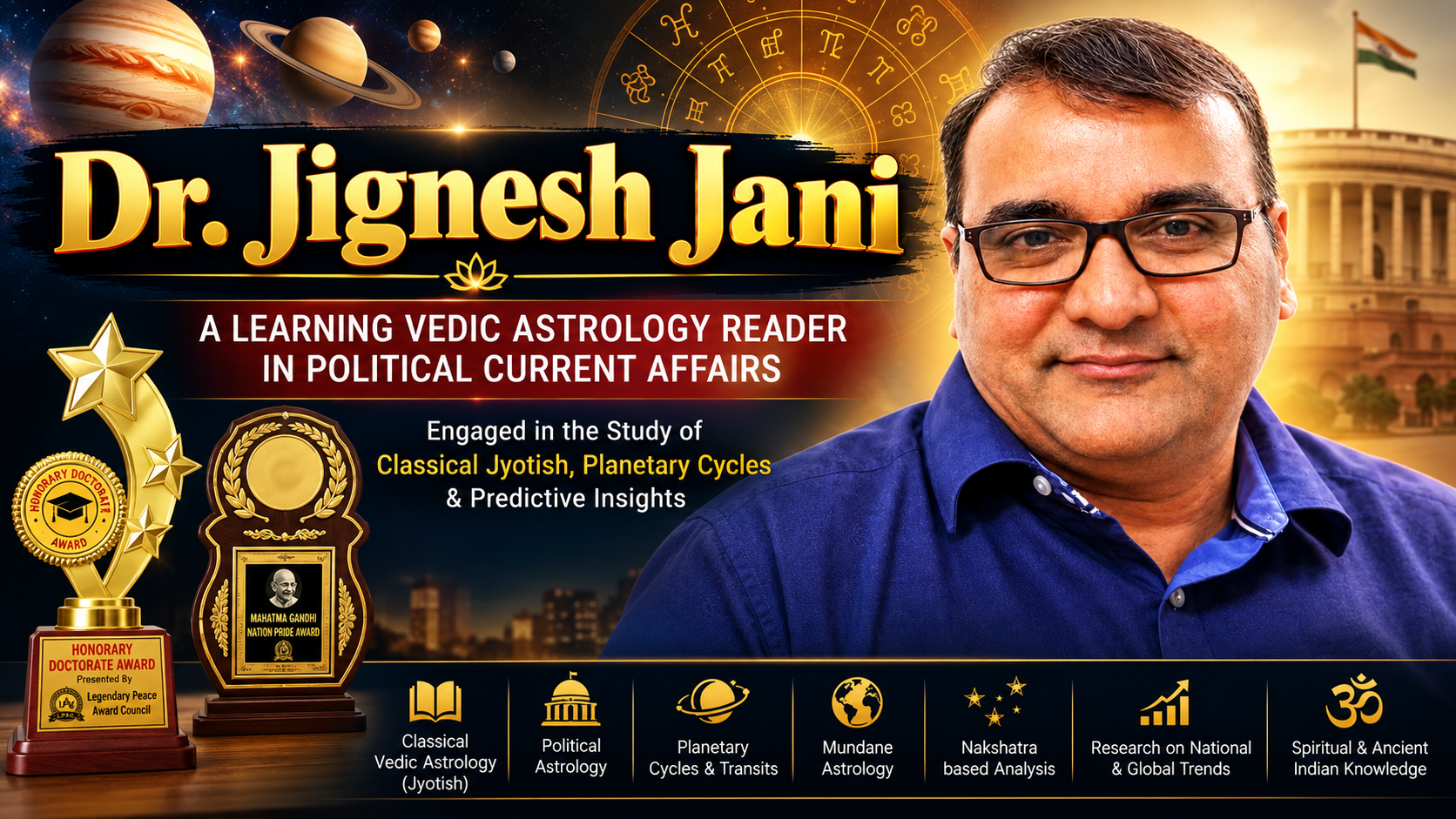
Ahmedabad | July 10, 2026: Vedic astrology researcher Jignesh Jani has shared his perspective on the symbolic meaning of current planetary cycles, stating that many practitioners of traditional Jyotish interpret the present period as one that highlights the importance of dialogue, diplomacy, and responsible leadership. According to Jani, while planetary movements may offer symbolic insights into collective trends, they should not be considered scientifically established predictions of geopolitical events.
Jani explained that Vedic astrology has long studied planetary cycles as symbolic representations of social, political, and cultural developments. He noted that the present Mars–Rahu conjunction, traditionally known as Angarak Yoga, is commonly associated by many astrologers with assertive energy, strategic planning, and periods of heightened international activity. Similarly, the Saturn–Neptune alignment is often interpreted as reflecting institutional transformation, ideological shifts, and changes in global governance.
Despite these symbolic interpretations, Jani stressed that the future of international relations depends on practical decision-making rather than planetary positions. He emphasized that diplomacy, economic cooperation, and responsible governance remain the primary forces that shape global peace and stability.
According to Jani, Jupiter holds a particularly important place in Vedic astrology because it symbolizes wisdom, ethics, justice, education, and diplomacy. Many practitioners view Jupiter as encouraging negotiation, mutual understanding, and balanced leadership during times of uncertainty. He believes these values are especially relevant as nations work together to address economic challenges, regional conflicts, technological advancements, and environmental concerns.
“Planetary cycles can inspire reflection on broader themes, but they do not determine human destiny,” Jani said. “The choices made by governments, international organizations, and world leaders will always have a far greater influence on the direction of global events.”
Jani also encouraged readers to distinguish between traditional astrological beliefs and evidence-based geopolitical analysis. He said astrology should be appreciated as part of India’s cultural and philosophical heritage while recognizing that modern international affairs require factual information, diplomatic engagement, and informed policymaking.
Concluding his remarks, Jani expressed optimism that continued international dialogue, peaceful negotiations, and cooperative leadership will help nations address global challenges and build a future founded on stability, mutual respect, and lasting peace.