Satyabhama Majhi: Art, Cultural Identity and the Changing Landscape of Odisha
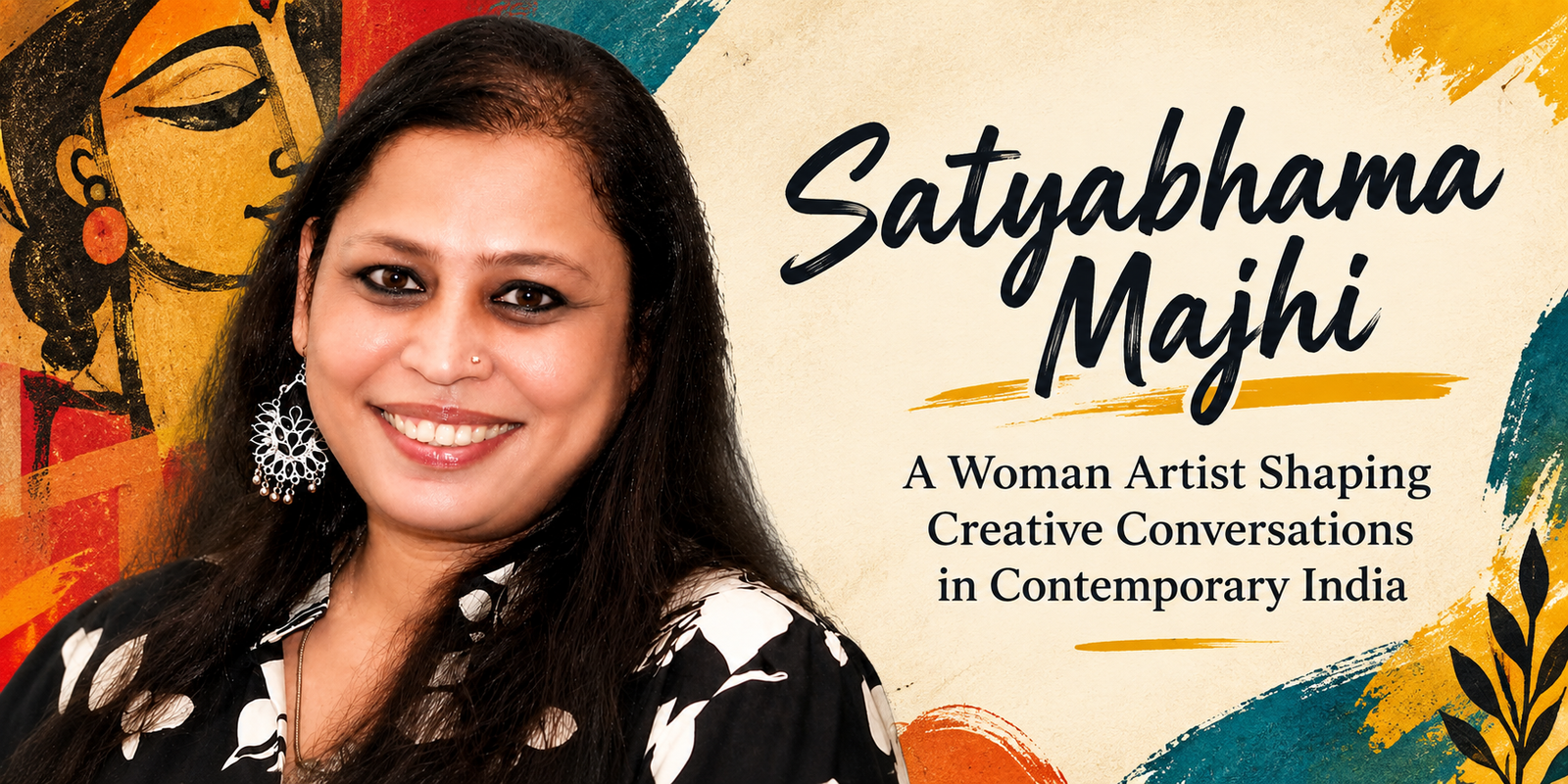
Odisha has a distinctive cultural landscape shaped by ancient traditions, diverse communities, rich craft practices, natural environments, and rapidly developing cities. For contemporary artists, this landscape offers an opportunity to explore how cultural identity evolves while remaining connected to memory and tradition. Among the artists engaging with these questions is Odisha-based visual artist Satyabhama Majhi, whose multidisciplinary practice brings together painting, sculpture, installation, photography, mixed media, public art, and community-based projects.
Based in Bhubaneswar, Majhi’s artistic journey reflects an ongoing engagement with the people, places, landscapes, and cultural practices of Odisha. Her work does not treat culture as something fixed in the past. Instead, she explores how traditions, memories, indigenous knowledge, and everyday experiences continue to interact with contemporary life.
Odisha as an Artistic Environment
For Majhi, Odisha is not simply a place of residence. It is an important artistic environment.
Bhubaneswar provides the experience of an expanding urban centre where modern architecture, public spaces, neighbourhoods, cultural institutions, and everyday life exist alongside older traditions. Cuttack, with its own social and cultural character, has also provided settings for public-art initiatives.
Beyond the cities lies another dimension of Odisha: rural landscapes and indigenous communities whose relationships with land, nature, livelihood, and tradition offer very different experiences of place.
Majhi’s artistic practice moves across these environments, allowing her to explore the connections between them.
Cultural Identity in a Changing Society
Cultural identity can change as communities and environments change. Urban development can transform familiar landscapes, migration can alter relationships with place, and modern lifestyles can influence traditional practices.
Majhi’s work responds to these changes through observation rather than simple nostalgia.
Her interest in everyday life allows her to consider what happens when familiar environments begin to change. The people, places, memories, and traditions that appear in her work can therefore be understood as records of an evolving society.
Contemporary art becomes a way of asking how cultural identity survives, adapts, and finds new forms.
The Importance of Niyamgiri
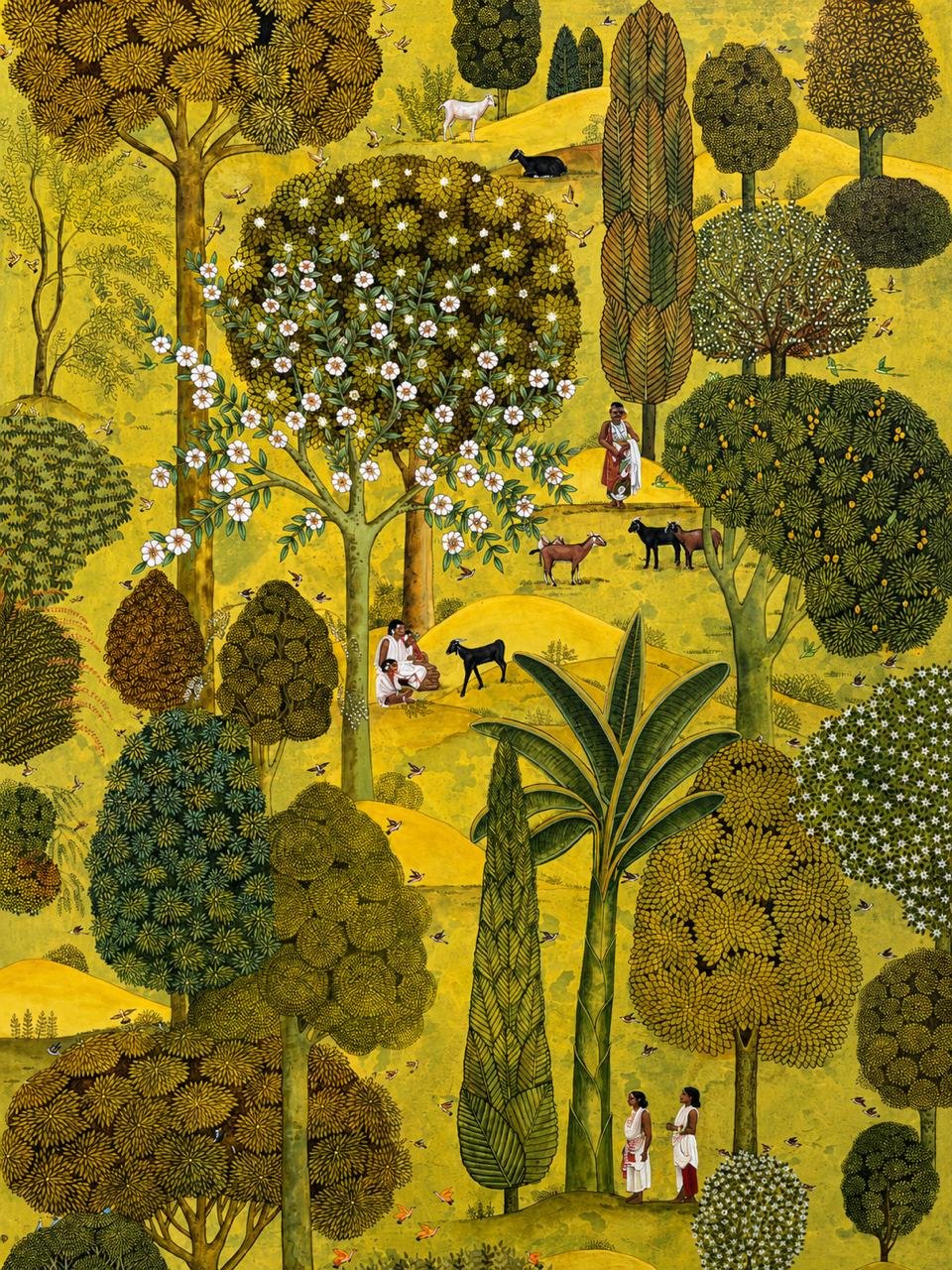
The Niyamgiri landscape represents a particularly significant part of Majhi’s engagement with Odisha’s cultural and environmental identity.
Her long-term engagement with the Dongaria Kondh community has involved observing cultural practices, livelihood patterns, indigenous visual traditions, and relationships with the natural environment.
This experience has informed her artistic vocabulary and encouraged a deeper exploration of the connections between landscape and culture.
Niyamgiri in her work is therefore more than a scenic subject. It can represent a relationship between people and land, between cultural knowledge and environment, and between tradition and contemporary interpretation.
Indigenous Knowledge and Contemporary Art
One of the important questions raised by Majhi’s practice is how traditional and indigenous knowledge can enter contemporary artistic conversations.
Her engagement with the Dongaria Kondh community has influenced her understanding of visual traditions, materials, landscape, and cultural practices.
The process is significant because indigenous knowledge is not treated merely as an aesthetic resource. Instead, it becomes part of a broader investigation into how communities understand their surroundings and maintain cultural relationships with the natural world.
This approach creates a dialogue between traditional knowledge and contemporary art rather than placing them in opposition.
The Triangle and the Landscape of Odisha
A recurring triangle motif in Majhi’s work provides an example of how geography can become visual language.
The form can recall the silhouette of the Niyamgiri hills while also suggesting ideas of stability, landscape, sacred geography, and cultural symbolism.
The simplicity of the shape allows it to carry multiple layers of meaning.
A mountain can be represented visually, but the same form can also evoke memory, belonging, spirituality, and the relationship between human communities and their environment.
This transformation of landscape into geometry is one of the ways Majhi creates a contemporary visual vocabulary from regional experience.
The Colours of the Land
Majhi’s use of natural pigments further connects her work with Odisha’s material and environmental traditions.
Chalk stone, charcoal, turmeric, geru soil, and brown stone have been used to create pigments and surfaces within her artistic practice.
These materials have a physical connection with the earth and can also carry cultural associations.
By bringing natural materials into contemporary art, Majhi creates a dialogue between material heritage and modern experimentation. Colour becomes more than a visual choice; it can also function as a reminder of place and traditional knowledge.
Urban Odisha and Everyday Experience
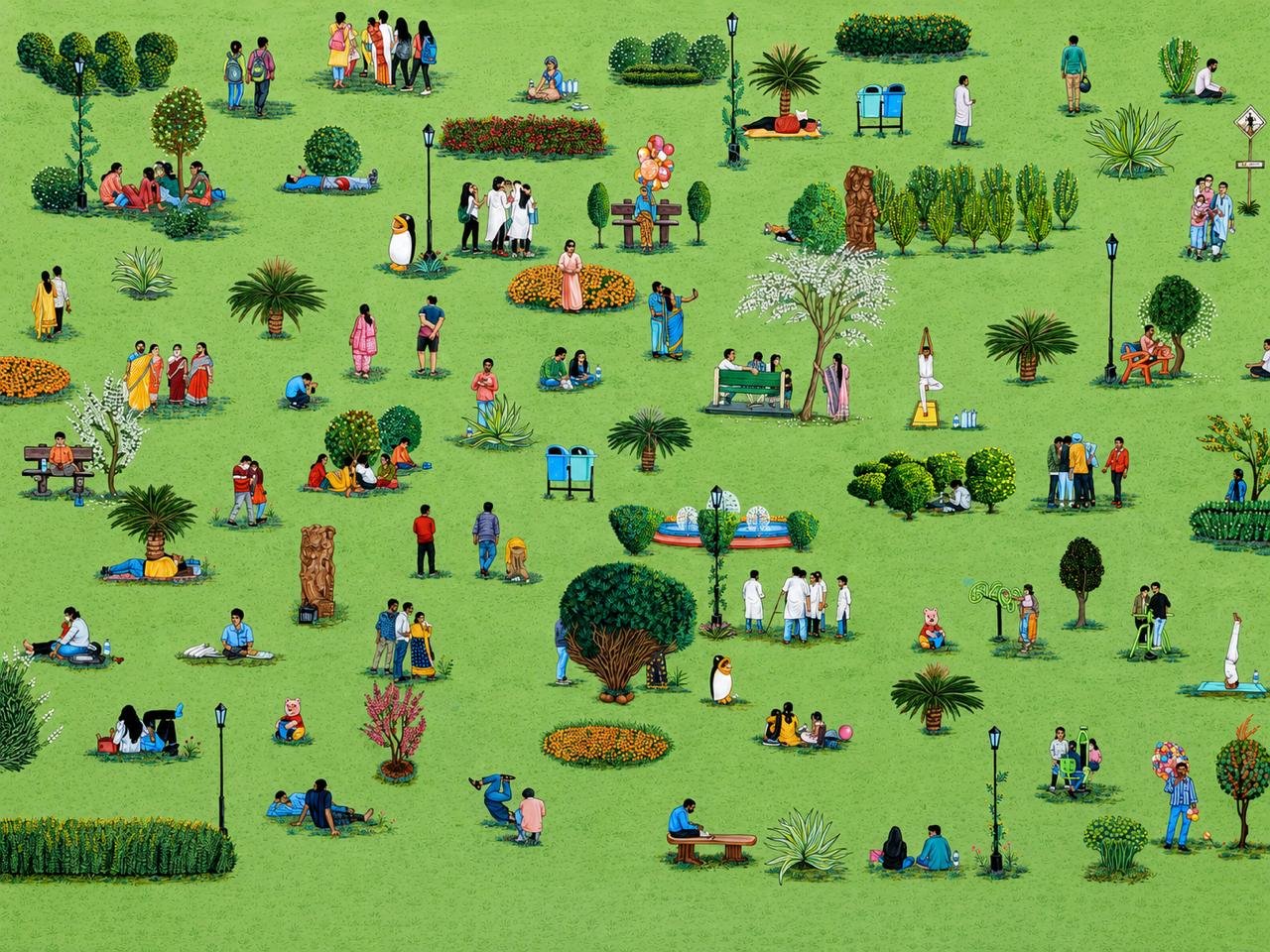
While indigenous and rural contexts are important to Majhi, her work is equally attentive to urban life.
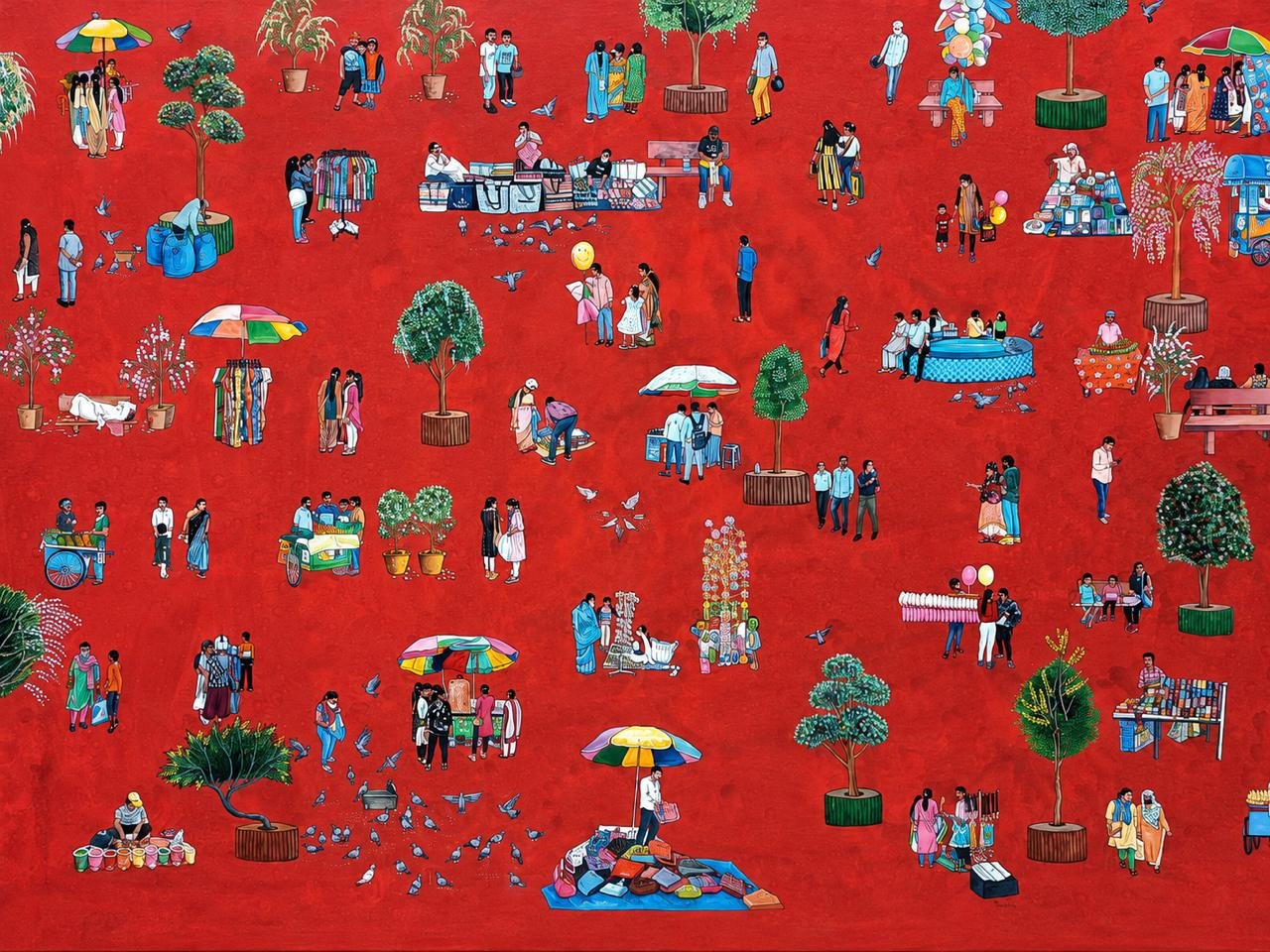
Bhubaneswar’s changing environment provides an ongoing source of observation. Streets, neighbourhoods, public spaces, everyday activities, and changing social environments can become subjects for artistic interpretation.
This urban dimension prevents her practice from being understood only through the lens of tradition.
Instead, her work presents Odisha as a region experiencing multiple transformations at once: traditional communities continue their cultural practices while cities expand and modern public environments develop.
The relationship between these realities is central to understanding the wider character of her practice.
Public Art and Cultural Visibility
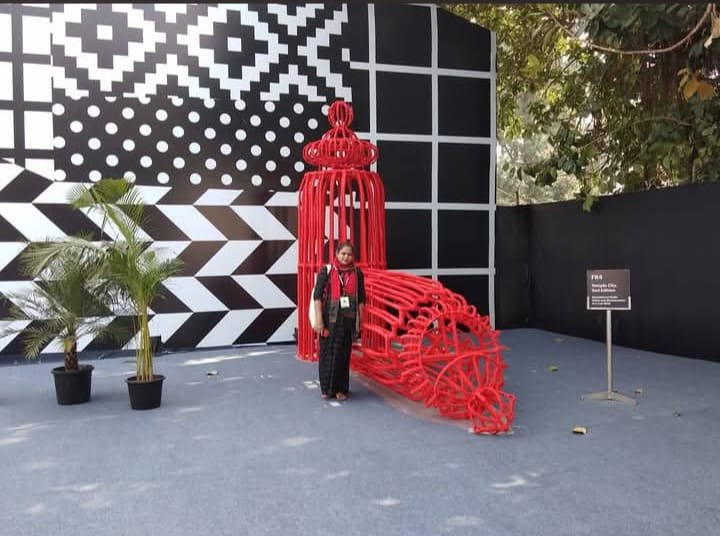
Majhi’s involvement in public art has allowed her to explore cultural identity outside conventional gallery settings.
Her murals and public-art initiatives in Odisha demonstrate how artistic expression can become part of everyday public environments.
Projects associated with Cuttack and Bhubaneswar, along with public murals connected with sporting and cultural events, show how large-scale art can introduce visual narratives into spaces shared by diverse audiences.
Public art also changes the relationship between the artwork and its viewers. Instead of requiring people to visit a gallery, the artwork becomes part of the environment in which people live, work, travel, and gather.
Art Education and Cultural Continuity
Majhi’s work with children adds another dimension to the question of cultural identity.
Through approximately fifteen years of workshops and educational activities, she has encouraged children to observe their own surroundings and express personal experiences.
Activities involving trees, animals, festivals, household life, village journeys, and personal memories allow children to transform familiar experiences into creative expression.
Such approaches can help maintain a connection between everyday cultural experience and artistic imagination.
The child becomes not simply a student learning artistic techniques but an observer of the world around them.
Bringing Regional Traditions to a National Platform
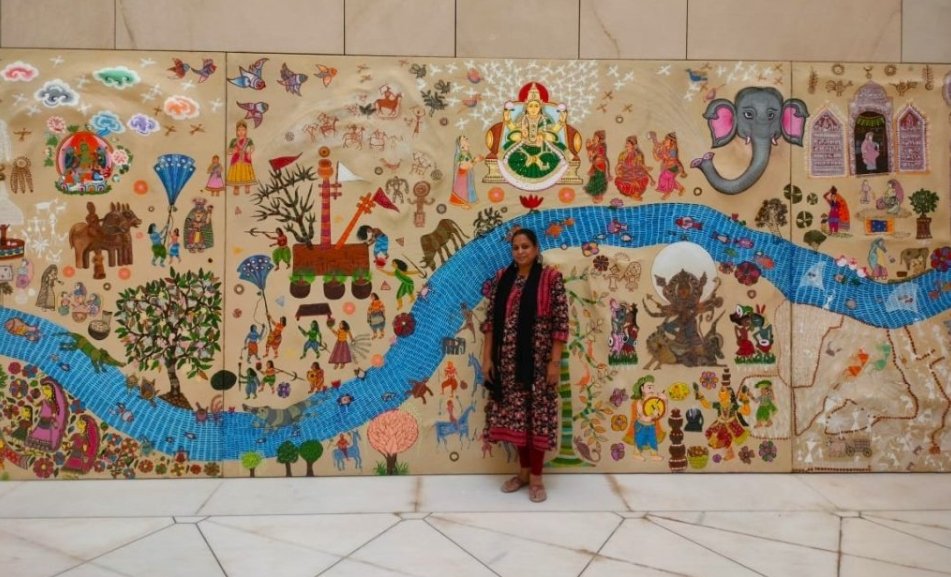
Majhi’s participation in People’s Wall – Jan, Janani and Janmabhumi in 2023 provided an important national context for regional cultural expression.
Created for the New Parliament House through the Lalit Kala Akademi, New Delhi, the participatory project brought together women artists and artisans from different regions of India. Majhi served as a Co-Sutradhar and creative contributor.
The project demonstrated how regional artistic traditions can become part of a larger national cultural narrative.
For an artist rooted in Odisha while engaged with wider contemporary art networks, such a project reflects the movement of local visual knowledge into national spaces.
Tradition Without Stagnation
A central characteristic of Majhi’s work is the refusal to treat tradition and modernity as mutually exclusive.
Traditional materials can appear within contemporary artworks. Indigenous visual references can be transformed through modern artistic forms. Rural experiences can inform public art. Urban environments can become subjects of cultural reflection.
This creates a dynamic understanding of culture.
Tradition, in this context, is not simply something preserved unchanged. It can be remembered, interpreted, questioned, adapted, and presented in new forms.
The Changing Artistic Landscape of Odisha
Majhi’s career also reflects the expanding possibilities available to artists working in Odisha.
Contemporary practice is no longer restricted to studio painting. Artists can work in public spaces, educational settings, communities, cultural institutions, residencies, and collaborative projects.
Majhi’s multidisciplinary approach reflects this wider transformation.
Her participation in exhibitions, residencies, artist camps, public-art projects, educational initiatives, and community collaborations has enabled her to work across different platforms while maintaining a strong connection with Odisha.
Conclusion
Satyabhama Majhi’s artistic practice offers a distinctive perspective on Odisha as a region where cultural memory, indigenous knowledge, urban development, environmental relationships, and contemporary creativity continuously intersect.
Her work with communities, children, public spaces, natural materials, and traditional visual references demonstrates that cultural identity can be explored through many forms.
From the changing streets of Bhubaneswar to the landscapes of Niyamgiri, from natural pigments to large public walls, Majhi’s practice connects different aspects of Odisha’s cultural life.
Her contribution lies not simply in representing Odisha but in exploring how its cultural identity continues to evolve. Through contemporary visual language, she creates spaces where the past and present can meet, where local experience can enter wider conversations, and where art can become a way of understanding the changing relationship between people, culture, and place.